
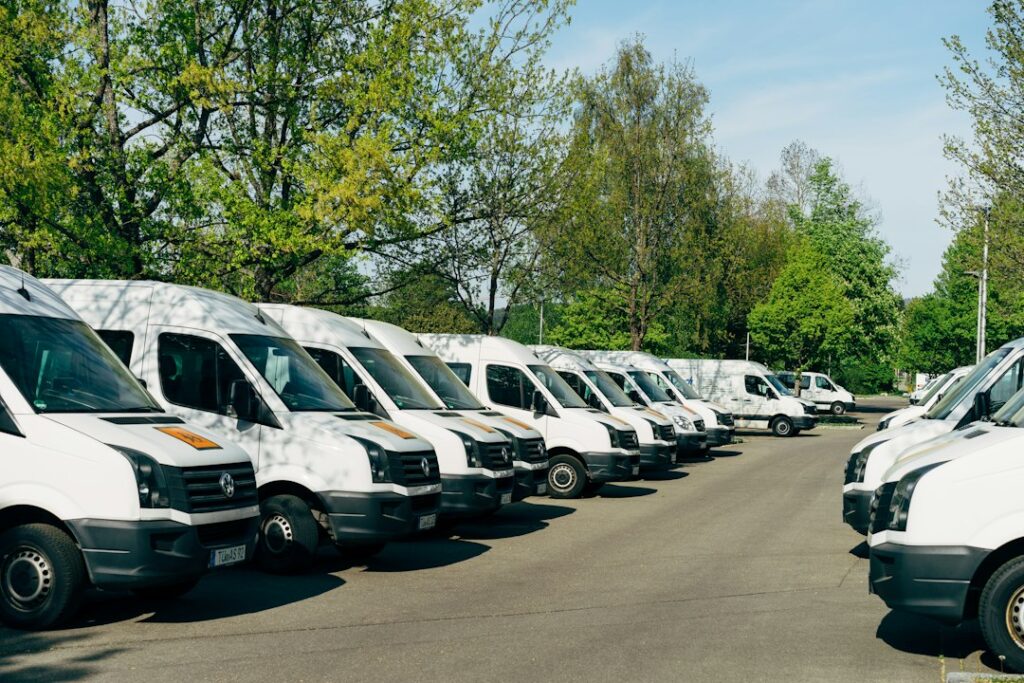
Fleet management software helps a business coordinate vehicles, drivers, maintenance and operating costs from one place. For a small company with a handful of vans, service vehicles or delivery trucks, the right platform can reduce avoidable downtime and make day-to-day decisions easier. The best choice is not necessarily the system with the most features; it is the one that fits the way your fleet actually works.
What fleet management software should do
Start with the operational problem you want to solve. A local delivery company may need live vehicle locations and route visibility. A contractor may care more about maintenance schedules, inspections and vehicle availability. A growing service business may need driver behavior reporting and proof of service.
- Vehicle tracking: Current location, trip history, geofences and alerts.
- Maintenance: Service intervals, inspection records, defect reporting and reminders.
- Driver safety: Coaching signals, harsh braking or speeding events where supported, and incident records.
- Fuel and utilization: Fuel transactions, mileage, idle time and vehicle-use trends.
- Dispatch and routing: Job assignment, route planning, estimated arrival times and customer updates.
- Reporting: Fleet costs, vehicle utilization, downtime and compliance documentation.
Platforms worth evaluating
Small businesses can build a shortlist around their fleet size and workflows. Fleetio is commonly evaluated for maintenance and fleet operations. Samsara offers a broader connected-operations platform that may suit businesses needing telematics and safety tools. Verizon Connect is another established option for GPS fleet tracking and fleet workflows. Azuga is worth reviewing when driver behavior and fleet tracking are priorities. Geotab has a broad telematics ecosystem and partner integrations.
These are starting points for evaluation, not a universal ranking. Confirm current product packages, hardware requirements, contract terms and availability directly with each provider.
Comparison checklist
| Need | Questions to ask |
|---|---|
| GPS tracking | How often does location refresh? Is historical trip data included? |
| Hardware | Is installation required, and what devices are compatible? |
| Maintenance | Can reminders be based on mileage, engine hours or dates? |
| Drivers | Can access and reports be restricted by role? |
| Integrations | Does it connect to dispatch, payroll, accounting or fuel systems? |
| Cost | Are hardware, installation, connectivity and support charged separately? |
How to select the right system
- List every vehicle and record its type, ownership, mileage and primary use.
- Choose two or three measurable goals, such as fewer missed services or better route visibility.
- Map the daily workflow from job assignment to vehicle return.
- Ask vendors to demonstrate those exact workflows using realistic examples.
- Calculate total cost for the full contract term, including devices and installation.
- Run a limited pilot before rolling the platform out to every driver.
Implementation tips
Explain what data is collected, who can see it and how it will be used. Set a consistent vehicle naming convention, enter accurate odometer readings and assign responsibility for maintenance records. Avoid turning on every alert at once; begin with the few notifications that prompt a clear action. Review results with drivers and managers after the first month.
Frequently asked questions
Is fleet management software useful for fewer than ten vehicles?
It can be, especially when vehicle downtime, dispatch visibility or maintenance records have a meaningful business impact. Compare the subscription and hardware costs against the time and expense the system is expected to save.
Does fleet software always include GPS hardware?
No. Some providers require dedicated devices, while others offer app-based or mixed approaches. Confirm device compatibility, installation and data-plan costs before signing.
Can it track fuel costs?
Many systems provide fuel reporting or integrations, but coverage varies. Ask whether fuel transactions are imported automatically or entered manually.
Final considerations
Choose fleet software around a specific operational outcome rather than a long feature list. A short pilot, clear driver communication and a realistic total-cost calculation will usually reveal more than a generic product demonstration.
Editorial note: Product capabilities, packages and pricing change. Verify current details with vendors and assess suitability for your fleet before purchasing.