
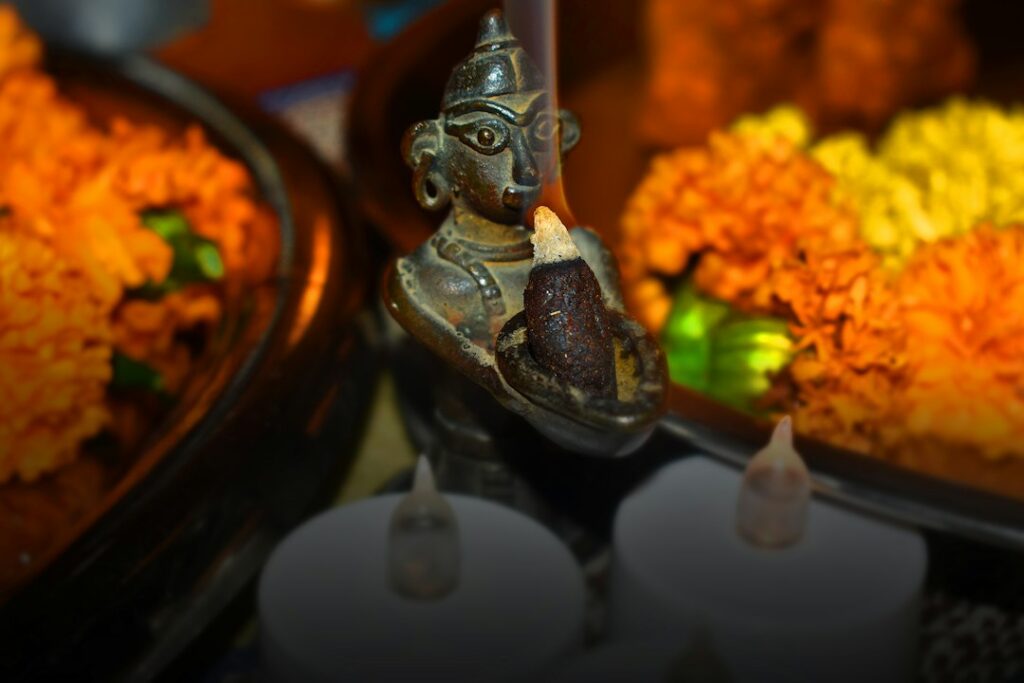
A simple Hindu home altar, often called a puja space or mandir, is a dedicated place for prayer, remembrance and daily devotion. You do not need a large room or an elaborate collection of objects. Begin with a clean, quiet and respectful spot, place an image or murti that is meaningful to your family, and keep only the items you can use safely and maintain consistently.
Related Spiritual Guides
1. Choose a suitable place
Select a location that is clean, reasonably quiet and away from clutter. A shelf, small cabinet or dedicated corner can work. Many households follow Vastu or family customs when choosing direction and placement, but recommendations differ. If directional rules matter in your tradition, consult a knowledgeable teacher rather than assuming one internet rule applies to every home.
Keep the altar out of areas where it may be accidentally knocked over. If you have children or pets, use stable shelves and keep lamps, matches, incense and small objects out of reach.
2. Decide what belongs on the altar
Start with a small number of meaningful items. Common choices include:
- An image or murti of the deity you worship.
- A clean cloth or small platform.
- A diya or safe electric lamp, depending on the home and fire-safety needs.
- A small vessel for water.
- Flowers or a simple offering, when appropriate.
- Incense, if household members tolerate it and ventilation is adequate.
- A japa mala for mantra repetition.
You do not need every item. A photograph, a prayer book and a few minutes of sincere attention can be enough to begin a personal routine.
3. Arrange items with care
Place the deity image or murti where it is stable and easy to see. Keep offerings in clean containers and avoid overcrowding the space. Store matches and oils separately from cloth and paper. Never leave an open flame unattended; extinguish a diya or candle before leaving the room or going to sleep.
4. Understand the role of a yantra
A yantra is a sacred geometric diagram used in some Hindu worship and contemplative traditions. Its lines, triangles, circles, lotus forms and central point may represent particular theological or cosmological ideas, depending on the yantra. It is not simply a decorative symbol, and different yantras have distinct traditional contexts and methods of worship.
If you choose to include one, learn its name and purpose from a reliable source or teacher. Do not assume every yantra should be installed or worshipped in exactly the same way. RudraGram’s Yantra collection can be browsed as a product reference; review the specific design and description before deciding whether it fits your practice.
5. Build a short daily routine
A realistic routine is easier to maintain than a complicated schedule. You might begin by cleaning the space, sitting quietly, offering a short prayer, repeating a familiar mantra and closing with gratitude. Some families perform aarti or make a traditional offering. Practices differ by deity, region and lineage, so use the sequence taught in your household or community.
6. Add a mala only if it supports your practice
A japa mala can help count mantra repetitions and reduce the need to watch a clock. A 108-bead mala is common, but not every mala has the same count or purpose. Rudraksha, Tulsi, sandalwood and crystal malas have different traditional associations. Explore the Japa Mala collection and verify the material, bead count and dimensions on each listing.
7. Keep the altar clean and safe
Replace flowers and water regularly. Wipe the platform with a suitable cloth and handle religious images respectfully. Keep incense ash in a safe holder and ensure good ventilation. Avoid placing oil lamps near curtains, books or loose fabric. If you use electrical lights, check wires and plugs periodically.
Common questions about home puja spaces
How much space do I need for a home mandir?
A small shelf or corner is enough. The key is that it remains clean, stable and suitable for quiet prayer.
Which direction should a home altar face?
Directional guidance varies across Vastu sources and household traditions. Follow the practice relevant to your family or consult a knowledgeable practitioner if it is important to you.
Can I keep a yantra and a deity image together?
Some households do, but placement and worship customs depend on the specific yantra and tradition. Learn its intended use before adding it to the altar.
Do I need to light a diya every day?
Not necessarily. Follow your family practice and choose a safe option. A prayer or quiet moment without a flame is also possible.
A home altar should support devotion
The purpose of a puja space is to make room for remembrance and meaningful practice. Keep it personal, simple and safe. Add objects gradually only when you understand their place in your tradition, and let a steady routine—not the number of items—shape the space.