
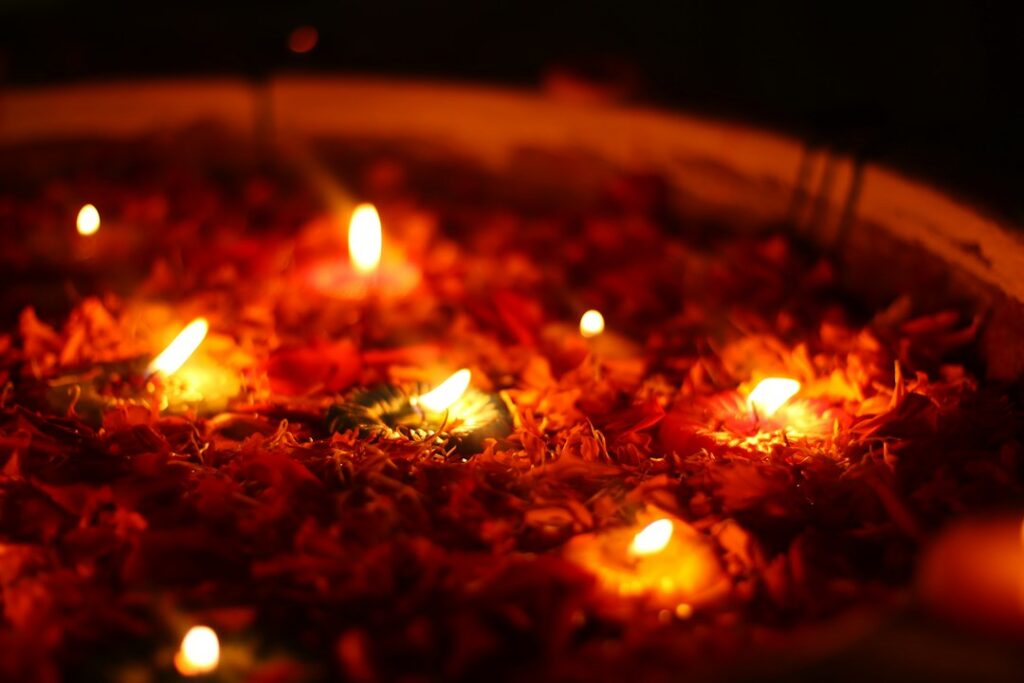
A daily Hindu puja routine does not have to be long or elaborate. A simple practice can include preparing a clean space, offering a short prayer, repeating a familiar mantra, making an offering if it is part of your tradition, and ending with gratitude. The exact steps differ by deity, region, family custom and sampradaya, so treat this as a flexible starting point rather than a universal ritual prescription.
1. Prepare a clean space
Choose a stable place for prayer, such as a home mandir or a clean shelf. Keep the area uncluttered and arrange images or murtis respectfully. If you have children or pets, secure small objects and keep lamps, matches and incense out of reach.
2. Set an achievable time
Choose a time you can maintain. Some people pray in the morning, others in the evening, and many households do both. A five-minute practice done regularly may be more sustainable than a lengthy routine that creates stress.
3. Begin with a moment of stillness
Sit comfortably and allow yourself a few natural breaths. You may mentally offer respect to your chosen deity or remember the purpose of the practice. Avoid forcing the breath or treating the routine as a performance.
4. Offer prayer in the way you know
Some households offer water, flowers, fruit, incense or a diya. Other families keep worship very simple. Follow the customs you have learned and use offerings that are appropriate for your home. Never leave a flame unattended; ensure ventilation if using incense and avoid smoke around anyone sensitive to it.
5. Include mantra or japa if appropriate
Repeat a familiar mantra or divine name according to your tradition. A japa mala can help count repetitions, but it is optional. Many malas use 108 beads; check the count and material before buying. RudraGram’s Japa Mala collection includes devotional bead options, while its Rudraksha collection focuses on Rudraksha beads. Check each product page for exact specifications.
6. Close with gratitude
End with a short prayer, a moment of silence or a traditional aarti if that is part of your practice. Put away offerings appropriately and leave the area clean. The closing can be brief; it is the intention and consistency that make the routine personally meaningful.
How to adapt puja to a busy schedule
- Prepare the prayer space the night before.
- Keep only the essential items you regularly use.
- Choose one short prayer or mantra instead of trying to add many new practices at once.
- Use a reminder if it helps, but do not feel guilty when a day becomes unexpectedly busy.
- Learn the correct method for any specialised ritual from a trusted teacher.
Related Spiritual Guides
Frequently asked questions
Is there one correct time for daily puja?
Customs vary. Morning and evening are common, but follow your family or tradition’s guidance.
Do I need a diya every day?
Not necessarily. Follow your household practice and prioritise fire safety. Prayer can also be offered without an open flame.
Can I do puja without a home temple?
Yes. A clean, quiet place is sufficient for a simple personal prayer routine.
Can a mala be part of daily puja?
Yes, if it suits your practice. Learn the correct mantra and counting method from a reliable source.
Keep devotion sustainable
A daily routine should support faith and reflection, not become a source of pressure. Keep it simple, safe and respectful of the tradition you follow. Add more steps only when you understand their purpose and can maintain them comfortably.