
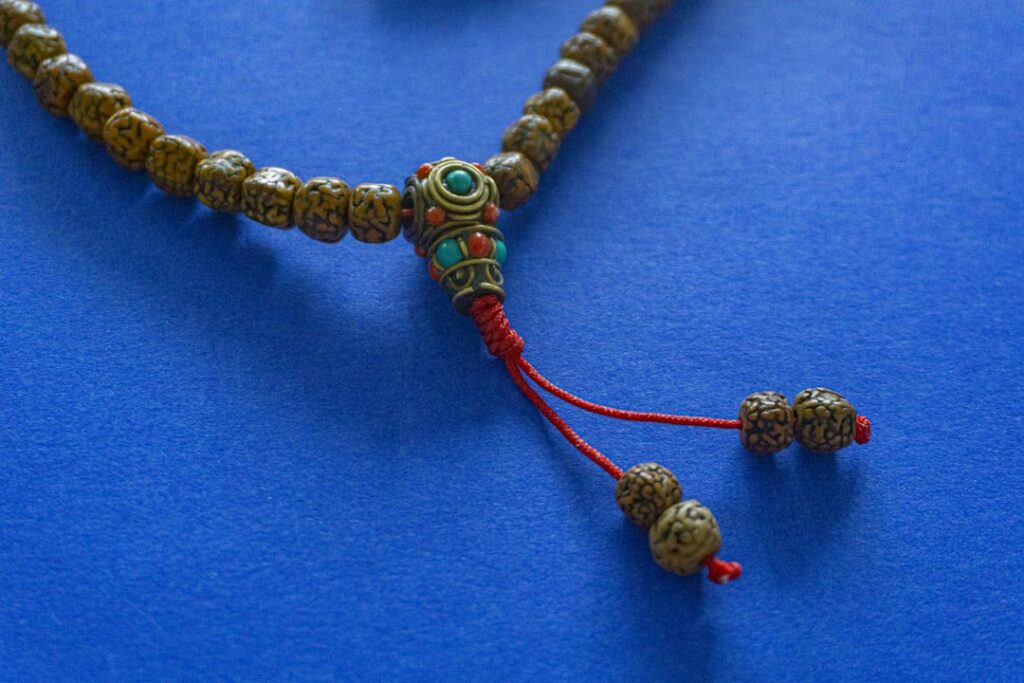
A Rudraksha bracelet and a Rudraksha mala are made from the same broad type of sacred seed, but they are designed for different practical uses. A bracelet is usually a shorter piece intended for wearing, while a japa mala is typically a longer strand with a bead count—often 108—used to count mantra repetitions. The better choice depends on whether you want devotional jewellery, a counting aid for prayer or both.
What is a Rudraksha bracelet?
A Rudraksha bracelet is a small number of beads strung on elastic, thread or a clasp. It may be worn as jewellery or as a reminder of a devotional intention. Bead sizes, metal caps and designs vary. Check wrist measurements and the strength of the string before buying.
What is a Rudraksha japa mala?
A japa mala is designed to support mantra repetition. Many have 108 beads and a separate guru bead. The practitioner moves one bead for each complete repetition, following the method taught in their tradition. A mala may be used during seated prayer and stored carefully when not in use.
Comparison: bracelet vs mala
| Feature | Bracelet | Japa mala |
|---|---|---|
| Main use | Devotional wear and personal reminder | Counting mantra repetitions |
| Bead count | Usually fewer beads | Often 108 plus a guru bead |
| Fit | Should match wrist size | Designed to be held or worn as a necklace |
| Daily handling | May experience more friction and contact | Often handled during a dedicated practice |
| Care focus | Elastic, clasp and wrist comfort | Thread, knots and bead storage |
Which one is better for chanting?
A full japa mala is generally more convenient when you want to count a traditional round of repetitions. A bracelet can be a devotional reminder, but its bead count may not match the count you want. If you intend to use a bracelet for counting, check whether its bead count and method are suitable for your practice.
Can you wear both?
Some people wear a bracelet and use a separate mala for chanting. Customs differ, so follow the rules of your family or spiritual tradition. There is no need to buy both unless each has a clear purpose in your routine.
What should you check before buying?
- Confirm that the beads are described as Rudraksha and check the stated origin.
- Review bead size, count and dimensions.
- Look for clear photographs of the surface and finishing.
- Check thread, elastic or clasp quality.
- Read any certificate details and confirm what the report covers.
- Understand care instructions and the seller’s issue or return policy.
RudraGram has a Rudraksha collection and a dedicated bracelet collection. For a japa-focused design, compare the Japa Mala collection. Check individual listings for material, count, dimensions and availability.
Care tips for both formats
Keep natural beads away from harsh chemicals and unnecessary moisture. Remove bracelets before swimming, showering or strenuous activity if the care instructions recommend it. Store a mala in a clean pouch and inspect its cord. Have a loose bracelet or fraying mala repaired before it breaks.
Related Spiritual Guides
Frequently asked questions
Can I chant with a Rudraksha bracelet?
You can use beads as a counting aid if the count and method fit your practice, but a traditional 108-bead mala is often more convenient for a full round.
Is a bracelet less spiritual than a mala?
There is no universal ranking. Their formats serve different purposes and their significance depends on the wearer’s tradition and intention.
Should I wear Rudraksha all day?
Follow your tradition and the product’s care guidance. Remove it when water, chemicals or physical activity may damage it.
Choose the format that serves your practice
Choose a bracelet for comfortable devotional wear and a mala when counting japa is your main goal. Read product specifications carefully and let your actual routine—not pressure or exaggerated promises—guide the decision.