
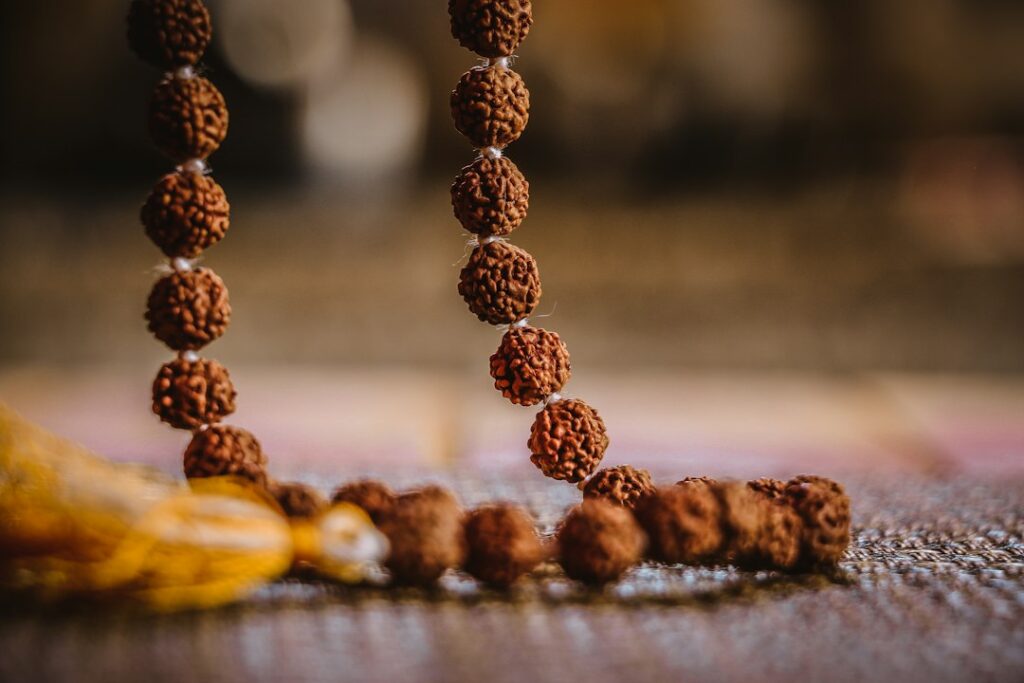
A 108-bead japa mala is a traditional counting tool used during mantra repetition, or japa. To use one, hold the mala gently, choose a mantra, begin at the bead next to the larger guru bead, and move one bead for each complete repetition. When you reach the guru bead again, pause rather than crossing over it; turn the mala around if you wish to continue.
For many people in the United States who are exploring Hindu meditation, a japa mala offers a simple way to give a daily practice structure. It is not a device that guarantees a particular result. Its value lies in helping the practitioner maintain attention, count repetitions and create a regular moment for reflection.
What is a japa mala?
Japa means the repetition of a sacred name, phrase or mantra. A mala is a string of beads used to keep count. In several Indian spiritual traditions, 108 beads form a commonly used full round. The number has layered traditional and symbolic interpretations; there is no single explanation accepted by every school.
A mala may be made from Rudraksha, Tulsi wood, sandalwood, crystal (sphatik), or other materials. The material can carry a particular meaning within a tradition, but the practitioner’s intention, consistency and understanding matter more than the appearance of the beads.
How to use a 108-bead mala: step by step
1. Choose a mantra you understand
Beginners can start with a short mantra or divine name they have learned from a trusted teacher or within their family tradition. If a mantra has initiation or pronunciation requirements in your lineage, follow that guidance. Do not assume every mantra is interchangeable.
2. Find the guru bead
The guru bead is usually larger or visually distinct and marks the beginning and end of a round. It is not counted as one of the 108 repetitions. Hold the mala so you can identify this bead without repeatedly looking down.
3. Hold the mala comfortably
Traditions differ on the exact hand and finger placement. A common practice is to support the mala with the right hand and move the beads with the thumb, while avoiding the index finger. If your teacher or tradition gives a different instruction, follow it. Keep the grip relaxed; do not pull or stretch the thread.
4. Repeat once and move one bead
Say the mantra once, silently or aloud, then move to the next bead. Keep the rhythm natural. The purpose is not to race through 108 repetitions but to remain present with each repetition. If your attention wanders, gently return to the mantra without judging yourself.
5. Pause at the guru bead
After 108 repetitions, you will arrive back at the guru bead. Pause for a moment. If you want to complete another round, turn the mala around and move in the opposite direction rather than crossing over the guru bead. This convention is common in many mala practices, though details vary.
How long does one round take?
The time depends on the length of the mantra, speaking pace and pauses. A short mantra repeated steadily may take several minutes; a longer mantra may take considerably more. There is no need to force a fixed speed. A calm, sustainable practice is usually more useful than an ambitious routine that is difficult to maintain.
Which mala material should a beginner choose?
- Rudraksha: Associated especially with Shaiva traditions and devotion to Shiva. Explore the Rudraksha bead collection and check each listing for origin, size and certification information.
- Tulsi: Revered in many Vaishnava traditions and often used for devotional chanting. Learn about japa malas and devotional beads.
- Sandalwood: Valued for its traditional association with worship and its natural fragrance.
- Sphatik (crystal): A clear, polished material used in some forms of prayer and meditation. Review the material and care instructions before buying.
Choose based on your practice, comfort, durability and the product’s stated material. A bead’s appearance alone does not prove its origin or authenticity.
Common mistakes to avoid
- Moving beads before completing the mantra repetition.
- Rushing only to finish a target number.
- Pulling the thread tightly or wearing a delicate mala during activities that may damage it.
- Assuming a particular material guarantees health, wealth or supernatural protection.
- Ignoring the guidance of a teacher when practising a mantra with specific rules.
How to care for a japa mala
Keep the mala dry unless the maker specifically says it can be washed. Avoid perfume, harsh cleaners, prolonged direct sunlight and excessive moisture. Store it in a clean pouch, away from sharp objects. If the cord becomes loose or frayed, have it restrung before it breaks. For natural beads, slight differences in colour, grain and shape are normal.
Related Spiritual Guides
Frequently asked questions
Do I have to chant exactly 108 times?
No. 108 is a traditional full-round count, but beginners may start with a smaller, manageable practice if that fits their circumstances and tradition.
Can I use a japa mala silently?
Yes. Mantra repetition may be audible, whispered or mental, depending on the practice and the guidance you follow.
Can I wear the same mala I use for chanting?
Some people do; others keep a separate mala for meditation and one for wearing. Customs differ, so follow your family or teacher’s preference and care for the beads accordingly.
Where can I compare different mala materials?
You can review RudraGram’s Japa Mala collection. Check the individual product page for material, bead count, dimensions and any available certification before ordering. International customers should confirm shipping availability and terms with the store before purchase.
A simple way to begin
Choose a quiet place, sit comfortably, take a few natural breaths and complete one short round at a pace that feels steady. Keep the practice modest enough to repeat tomorrow. Over time, the mala can become a familiar reminder to pause, focus and reconnect with the intention behind your mantra.