
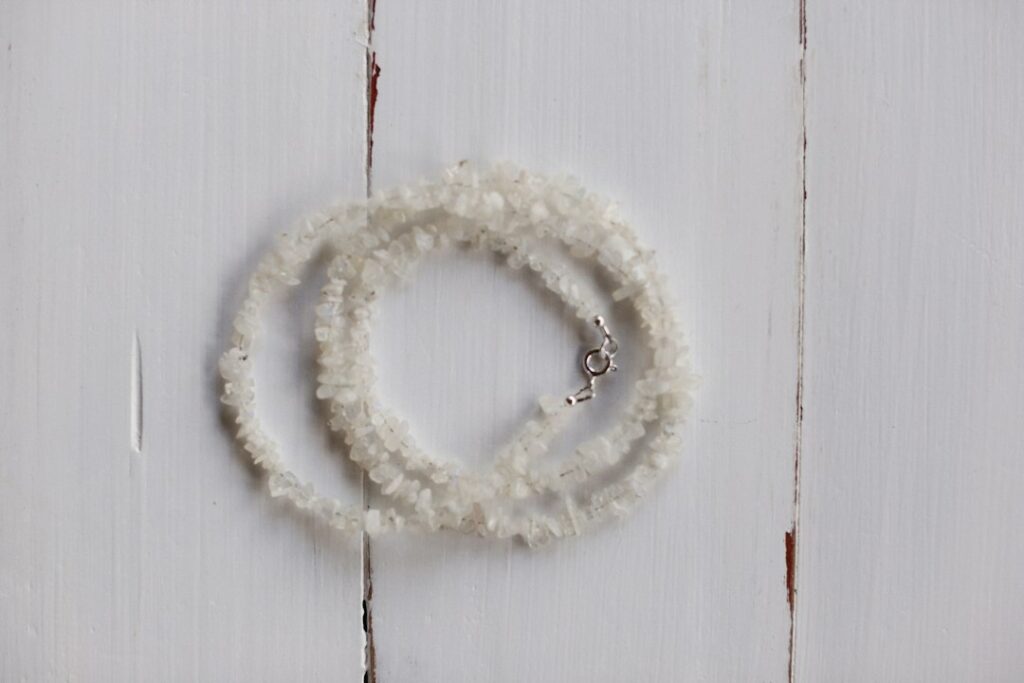
A sphatik mala is a string of beads made from clear or translucent quartz, commonly called crystal in the Indian devotional context. It is used by some practitioners for japa, prayer and meditation. The term sphatik is associated with crystal, but product descriptions can vary, so buyers should confirm the actual material, bead count, size and any treatment or imitation content before purchasing.
What does sphatik mean?
In many Indian religious settings, sphatik refers to a clear, glass-like mineral material used for beads and devotional objects. Clear quartz is a common material sold as sphatik, though the word may be used loosely in commerce. A transparent appearance alone cannot establish mineral identity. If material identity matters, look for a credible gem or mineral report and a clear seller description.
How is a sphatik mala used?
Some practitioners use a sphatik mala to count mantra repetitions or as a devotional object. The exact mantra and method depend on the tradition. A 108-bead count is common for japa malas, but not every necklace sold as a mala has 108 counting beads. Check the count and whether the design includes a separate guru bead.
Why do people choose crystal beads?
People may prefer sphatik for its clear appearance, smooth feel or traditional associations. Some traditions connect crystal with clarity, purity or particular forms of worship. Such meanings are religious interpretations and personal beliefs, not proven effects on health or energy fields. The mala should be understood as a devotional aid, not as a medical device.
How to choose a sphatik mala
- Confirm whether the beads are natural quartz, treated quartz, glass or another material.
- Check the number of beads and whether the guru bead is included.
- Review bead diameter, string quality and knot spacing.
- Look at photographs in natural lighting to understand clarity and inclusions.
- Ask whether the product has a laboratory report and what the report confirms.
- Check care, return and shipping terms before placing an order.
RudraGram features devotional bead options in its Japa Mala collection. Review each product page for material, size and count; do not assume every item in a collection is sphatik.
How to care for crystal beads
Quartz is relatively durable compared with some softer minerals, but it can still scratch, chip or break. Store the mala separately from harder jewellery, avoid dropping it on tile or stone, and clean it with a soft cloth. Avoid sudden temperature changes and harsh chemicals. Check the cord and knots periodically.
Related Spiritual Guides
Frequently asked questions
Is sphatik the same as glass?
No. Sphatik is commonly used for crystal or quartz in devotional products, while glass is a different material. However, a product’s appearance does not prove what it is made from; check its specifications or report.
Can I use sphatik mala for any mantra?
Mantra suitability depends on the tradition and the guidance you follow. Ask a knowledgeable teacher if a particular mantra has specific rules.
Does a sphatik mala have to contain 108 beads?
No. Some malas have 108 beads, while others are shorter necklaces or bracelets. Confirm the bead count before buying.
Can crystal beads break?
Yes. They can chip or break under impact, so handle and store them carefully.
Choose by material and practice
A sphatik mala can be a meaningful companion to prayer when its material and use are understood. Check the actual product details, follow the customs of your practice and care for the beads gently.