
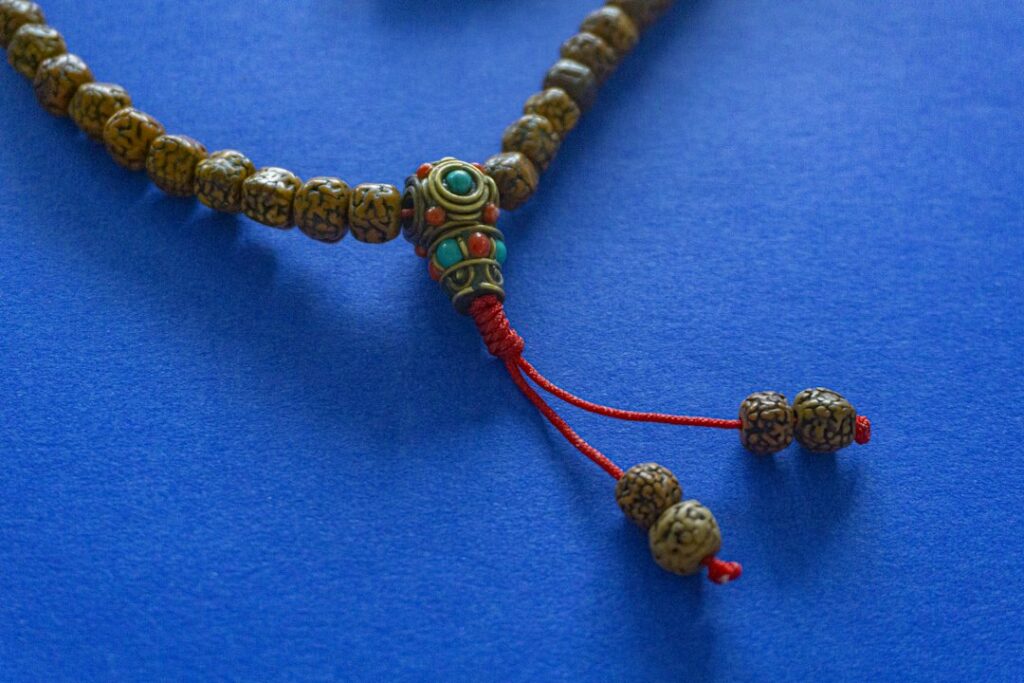
Rudraksha and Tulsi malas are both used in Hindu devotional practice, but they have different materials and traditional associations. Rudraksha beads are linked especially with Lord Shiva and Shaiva traditions, while Tulsi beads are deeply revered in many Vaishnava traditions. The right choice depends on the practice you follow, the material you prefer and how you plan to use the mala—not on a universal ranking of which one is more powerful.
What is a Rudraksha mala?
Rudraksha beads are the dried seeds of trees in the Elaeocarpus genus, particularly Elaeocarpus ganitrus. Their natural surface has distinct clefts or lines commonly called mukhis. In Hindu tradition, Rudraksha is closely associated with Shiva and is used in prayer, meditation and devotional jewellery.
Rudraksha malas are available in different bead sizes, origins and counts. Beads may be strung as a 108-bead japa mala, a shorter necklace or a bracelet. Natural variation is expected: shape, colour, texture and the depth of the lines can differ from bead to bead. Buyers should review the exact product specifications rather than relying only on a generic label.
What is a Tulsi mala?
Tulsi, also known as holy basil, is a sacred plant in Hindu traditions. Beads made from Tulsi stems or wood are used in devotional malas and kanthi necklaces, particularly in Vaishnava communities. Tulsi is associated with devotion to Vishnu and Krishna. For many practitioners, wearing or chanting with Tulsi beads is a visible expression of bhakti.
Tulsi beads are usually lighter than many stone or seed beads and can be more delicate. Their natural wood-like surface may darken or change with use, skin oils and exposure to moisture. Gentle handling and dry storage help preserve them.
Key differences at a glance
| Feature | Rudraksha mala | Tulsi mala |
|---|---|---|
| Material | Natural Rudraksha seed | Tulsi wood or stem beads |
| Traditional association | Strong association with Shiva and Shaiva practice | Strong association with Vishnu, Krishna and Vaishnava practice |
| Common use | Japa, meditation and devotional wear | Japa, kanthi wear and devotional practice |
| Feel | Varies by bead size and surface texture | Often light and wood-like |
| Care | Keep clean; avoid harsh chemicals and unnecessary soaking | Protect from moisture, oils and rough handling |
Which mala is better for chanting?
Neither is universally better. If your family, sampradaya or spiritual teacher recommends one, that guidance is the most relevant starting point. If you are exploring independently, consider the deity or mantra connected with your practice and learn the customary use of the material. Some practitioners maintain separate malas for different mantras; others use one mala consistently.
Also consider practical comfort. A 108-bead mala should sit comfortably in the hand and move smoothly during repetition. Bead size, knot spacing, thread strength and total weight can affect the experience more than a product photograph suggests.
Can someone wear both?
Customs vary. Some people wear a Tulsi kanthi and use a Rudraksha mala for a separate Shiva mantra; others prefer to follow one tradition’s rules and avoid mixing items. There is no single rule that applies to every Hindu household or lineage. If you have received specific instructions from a guru or temple tradition, follow those rather than treating online generalisations as religious authority.
How to choose an authentic mala
- Read the material description. Confirm whether the listing says natural Rudraksha seed or Tulsi wood, and ask questions if the description is unclear.
- Check bead count and dimensions. Confirm whether the mala has 108 beads, a guru bead, and the bead size you expect.
- Review origin details. If origin is important to you, look for specific information rather than broad claims.
- Review certification carefully. A certificate should identify the item or batch it covers. Not every product necessarily has the same type of report.
- Inspect construction. Look at the cord, knots, finishing and whether replacement or restringing is possible.
RudraGram offers a Rudraksha collection and a range of japa malas, including devotional bead options. Compare each product’s material, dimensions, origin and certification details. For Tulsi-specific items, read the product title and description closely before ordering.
Care and storage
Keep both types of mala away from harsh detergents, perfumes and prolonged soaking. Remove a delicate wooden mala before swimming, showering or strenuous activity if moisture or friction may damage it. Store it in a clean, dry pouch. Check the thread periodically and repair it before it becomes weak.
Related Spiritual Guides
Frequently asked questions
Is Rudraksha only for Shiva devotees?
Rudraksha has a strong traditional connection with Shiva, but its use varies among individuals and communities. Follow the guidance of your own tradition.
Is Tulsi mala only for Krishna devotees?
Tulsi is especially prominent in Vaishnava devotion, including Krishna and Vishnu worship, though practices differ by community.
Can I use either mala for 108 repetitions?
Yes, if the mala is made with the appropriate bead count and is intended for japa. Check the count rather than assuming every necklace contains 108 beads.
Which one lasts longer?
Durability depends on bead quality, stringing and care. Tulsi wood can be more sensitive to moisture and friction, while Rudraksha can also crack or become damaged if mishandled.
Choose according to practice, not pressure
A mala is a companion to a devotional routine, not a shortcut to guaranteed outcomes. Choose the material that fits your beliefs and daily use, verify what you are buying, and maintain it respectfully. The consistency of the practice is more important than comparing one sacred material against another.