
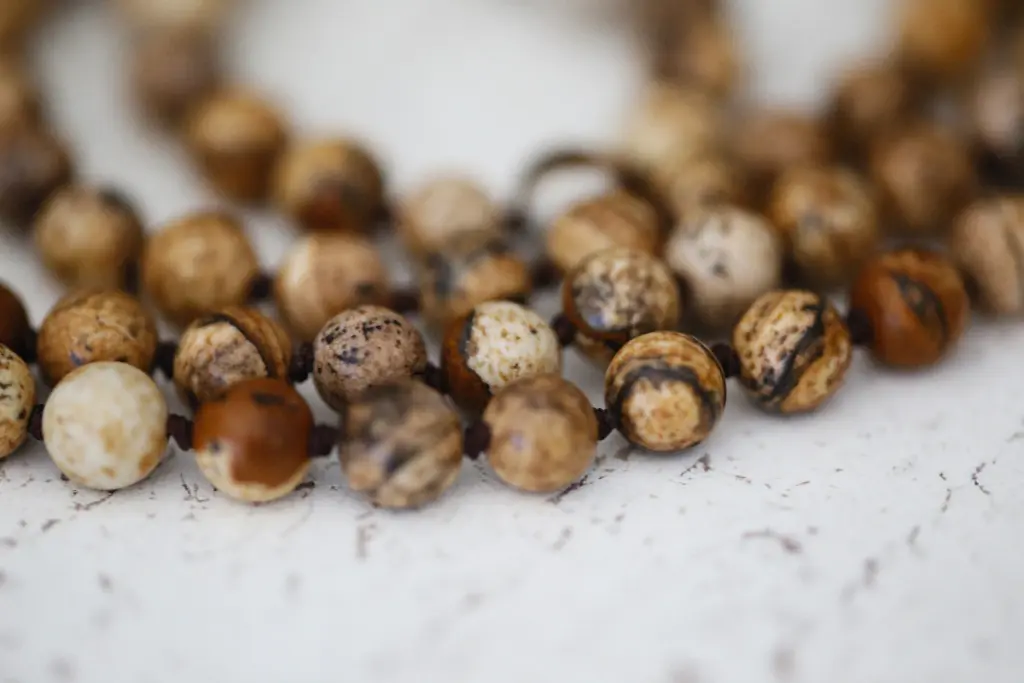
Hinduism places a lot of significance on the Tulsi Kanthi Mala, It is revered as a holy plant, Goddess Lakshmi is said to reside in Tulsi, according to the scriptures.
Tulsi’s name was Vrinda when Goddess Lakshmi was thought to have arrived on the planet as Radha Rani; she was the spouse of the demonic Jalandhar, who was slain by Lord Vishnu.
Saddened and enraged by this, Sati Vrinda cursed Lord Vishnu, causing him to continue taking the shape of Shaligram, or Sheela, on earth, Mother Lakshmi asked Vrinda to remove the curse on her husband in response to this. Upon hearing his request, Goddess Vrinda agreed to release Lord Vishnu each evening as long as he remained at her side before she became sati. Immediately after Goddess Vrinda attained sati, a plant emerged from her ashes.
Importance of Tulsi Kanthi Mala:
The respected form of Sati Vrinda was this plant, In addition, Lord Vishnu granted Goddess Tulsi the blessing that she would be known as the mother who bestows happiness and prosperity as well as the promise that she and Shaligram would wed once a year.
Lord Vishnu holds Tulsi in high regard because of this, Tulsi kanthi mala is valued by many devotees as a visible expression of devotion to Lord Vishnu and Krishna. Readers interested in other traditional devotional malas can also explore our guide to the spiritual significance of Vaijayanti Mala. Benefits are understood within religious and devotional traditions; claims that it will solve every problem or change planetary influences should be treated as beliefs rather than guaranteed outcomes. Before wearing one, consider your tradition’s guidance, the quality of the beads, and how to care for them.
Rules of wearing Tulsi Kanthi Mala:
1. Tulsi comes in two varieties: Rama and Shyama Tulsi.
2. In many Vaishnav traditions, devotees who wear a Tulsi kanthi mala follow a sattvic lifestyle. This may include avoiding meat, alcohol, onion, and garlic, according to their family or sampradaya practices.
3. Some devotees choose to keep their Tulsi kanthi mala on as a sign of devotion; practices differ by tradition and personal circumstances.
4. Follow the guidance of your guru or family tradition about when and how to remove or care for the mala.
5. Tulsi kanthi malas are commonly worn around the neck, though forms and customs can vary by tradition.
6. People who wear Tulsi garlands should recite Lord Vishnu’s mantras every day.
7. Some traditions have specific guidance about wearing Tulsi and Rudraksha together, while others may permit both. Ask a trusted spiritual guide for advice relevant to your sampradaya; there is no need to present this as a universal rule.
8. If you cannot wear a neck mala, ask your spiritual guide whether an alternative form of wearing or keeping it is appropriate in your tradition.
9. Keep the mala clean and dry, and handle the beads gently. Follow your tradition’s guidance for ritual care; avoid assuming that washing it in a particular water source is required for everyone.
If you want to buy a Tulsi Kanthi Mala for personal devotional use, explore RudraGram’s product page for current product details. Check availability, materials, shipping, and return terms before ordering.
Sources and Further Reading
- Encyclopaedia Britannica: Holy Basil — botanical background on holy basil (Tulsi). This is a general reference and does not establish specific religious customs.
Frequently Asked Questions
What is a Tulsi Kanthi Mala?
A Tulsi kanthi mala is a neck mala made from Tulsi wood beads and worn by many devotees, particularly in Vaishnav traditions, as a sign of devotion.
Can I wear a Tulsi Kanthi Mala every day?
Many devotees wear it daily. Follow the practices of your own tradition and care for the beads gently to help them last.
Can Tulsi and Rudraksha malas be worn together?
Guidance differs across traditions. If this matters to your practice, ask a trusted guru or spiritual guide rather than assuming one rule applies to everyone.
What should I check before buying one?
Check the bead material, finishing, comfort, seller details, and return policy. Choose a mala suitable for your devotional practice rather than relying on guaranteed claims about outcomes.