
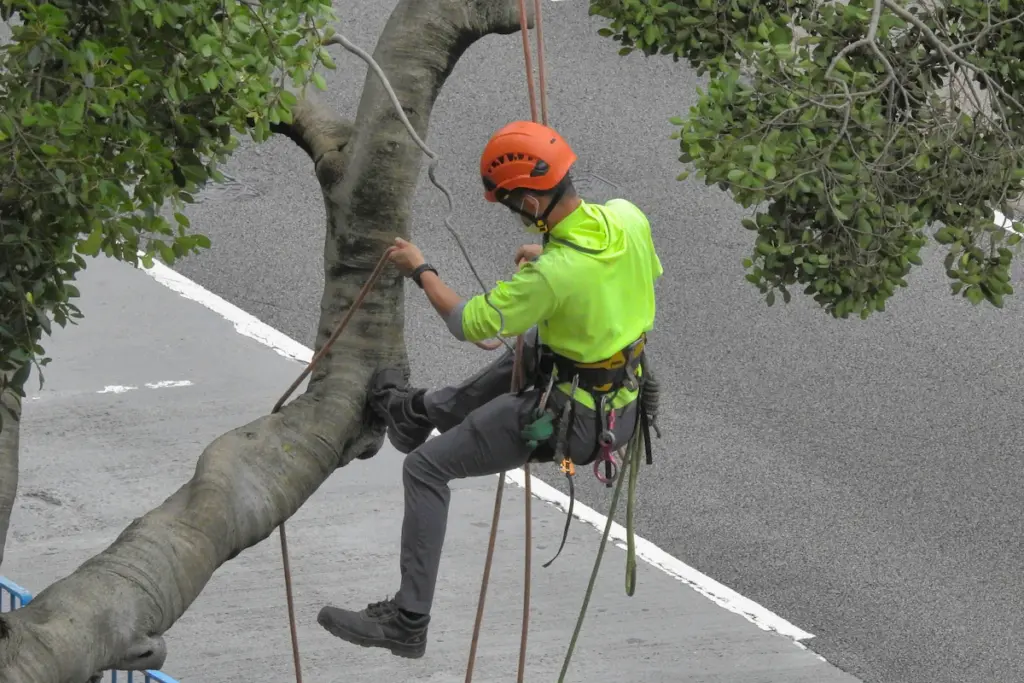
Tree service marketing in the USA depends on trust. Tree work is dangerous, expensive and done right next to homes, so homeowners want proof of insurance, expertise and safety before they let a crew near their property. The tree service companies winning more jobs display certified arborist credentials and insurance, create pages for each service, rank in Google Maps, run targeted Google Ads, prepare for storm response, collect reviews and partner with HOAs, property managers and landscapers.
Step 1: Credentials and insurance
Display ISA Certified Arborist credentials, TCIA membership, liability insurance and workers’ compensation coverage, and state licences where required. Many homeowners have heard stories of uninsured crews damaging property; make your coverage obvious.
Step 2: Service pages
Create pages for tree removal, tree trimming and pruning, stump grinding, emergency tree removal, storm damage clean-up, tree health assessments, cabling and bracing, land clearing and commercial tree care. Explain safety practices and typical costs.
Step 3: Google Maps
Use the Tree Service category, list services, upload photos of crews, equipment and completed jobs, and post updates. See our guide to local marketing strategies in the USA.
Step 4: Google Ads
Target “tree removal [town]”, “emergency tree service” and “stump grinding near me”. Ramp up quickly after storms with emergency messaging.
Step 5: Storm response
Storms drive huge demand. Prepare emergency landing pages, ad campaigns and crew plans in advance. Explain how you work with insurance claims. Avoid storm-chasing tactics that damage trust.
Step 6: Reviews and photos
Reviews mentioning safety, clean-up and professionalism are persuasive. Before-and-after photos and videos of complex removals show skill.
Step 7: Partnerships
HOAs, property managers, municipalities, landscapers and realtors need tree services regularly. See our guides to landscaping marketing and property management marketing.
Step 8: Seasonal campaigns
Promote pruning in dormant season, storm preparedness before hurricane or storm seasons, and hazard assessments after severe weather.
Step 9: AI search
Homeowners ask AI tools “how much does tree removal cost” or “is my tree dangerous”. Cost guides and tree health content with FAQ schema help your business be cited.
What to expect
Google Ads and storm campaigns generate calls quickly. Map Pack and service pages build over one to six months. Partnerships create steady work.
Getting help
One option is the tree service marketing programme from QHR Solutions, which covers websites, local SEO, Google Business Profile, ads, reviews and AI search visibility, with a free audit and 90-day plan within 48 hours and no lock-in. (Disclosure: QHR Solutions built and supports this publication.)
A 30-day checklist
- Display arborist credentials and insurance.
- Create pages for each service.
- Publish a tree removal cost guide.
- Update Google Business Profile.
- Launch Google Ads on removal terms.
- Prepare a storm response page.
- Request reviews with photos.
- Contact three HOAs or property managers.
- Plan a dormant-season pruning campaign.
- Add FAQ schema.
Why tree work is sold on trust
Tree removal is one of the few home services where a mistake can destroy a roof, a car or a fence in seconds, and where workers face serious injury risk. Homeowners know this, which is why they look so carefully for proof of insurance and expertise. Price matters, but it is rarely the deciding factor for large removals near a house. The company that clearly explains how it will do the job safely, shows the right equipment and provides insurance certificates without hesitation usually wins, even at a higher price.
Explaining the job in the estimate
A professional estimate should describe exactly what will be done: which trees, whether the wood and brush will be hauled away or left, whether the stump will be ground and how deep, how the crew will protect lawns and structures, and what equipment (crane, bucket truck, rigging) is required. Photos marked with the trees in question avoid misunderstandings. Clear estimates reduce price comparison because homeowners can see they are not comparing like with like.
The role of the certified arborist
Many homeowners do not need a tree removed at all; they need an assessment. A certified arborist can recommend pruning, cabling or treatment that saves a valuable tree, or confirm that removal is the safest option. Offering assessments positions your company as an expert rather than a crew with chainsaws, and it builds long-term relationships. Plant health care programmes, such as fertilisation and pest treatment, also create recurring revenue between large jobs.
Storm response done right
After major storms, demand spikes dramatically and out-of-town crews arrive. Homeowners are vulnerable, and some get overcharged or receive poor work. Local companies can stand out by prioritising emergencies fairly, explaining insurance processes, documenting damage with photos for claims, and pricing transparently. Have a storm landing page ready, a plan for call handling and a list of priority clients such as property managers and HOAs. Avoid inflated emergency pricing; the reputation damage lasts far longer than the storm.
Building commercial and municipal work
HOAs, apartment communities, schools, utilities and municipalities need ongoing tree maintenance, often under annual contracts. These clients value safety records, insurance limits, references and reliable scheduling. Prepare a capability statement and contact property managers and facilities directors before budgets are set for the year.
Common mistakes to avoid
- Not showing insurance proof. A line saying “fully insured” is not enough; offer certificates.
- Vague estimates. Unclear scope leads to disputes about clean-up and stumps.
- Ignoring off-season work. Dormant-season pruning and land clearing keep crews busy in winter.
- Poor clean-up. Leftover debris generates bad reviews faster than almost anything else.
How to measure what is working
Track leads by source, estimate-to-job rate, average job value, share of revenue from recurring plant health care and commercial contracts, and safety incidents. Review after each season and invest in the channels and services that bring profitable, safe work.
A realistic example
Consider a tree service company with a bucket truck and a crew of five whose work came mainly from storm damage calls. Between storms, the schedule was thin. The owner added an ISA-certified arborist to the team and built pages for tree removal, trimming and pruning, stump grinding, tree health assessments, and emergency storm response, each showing equipment, insurance coverage and safety practices. Free on-site estimates were bookable online, and customers received written quotes with photos. The company offered annual pruning plans to homeowners and approached HOAs, property managers and municipalities for maintenance contracts. Within a year, planned work filled the calendar between storm events, and average job value increased thanks to arborist-led recommendations.
Your first 90 days
Month one: build service pages, highlight certifications and insurance, and update the Google profile with crew and equipment photos. Month two: add online estimate booking, request reviews after every job and launch a pruning plan. Month three: pitch HOAs and property managers, prepare a storm response plan for marketing, and track jobs and revenue by source.
How much to budget
Tree service companies should measure cost per completed job and pay attention to job value, which varies widely. Search ads and Local Services Ads work well for removal and emergency terms, while maintenance contracts reduce reliance on paid leads. Showing insurance and certifications is a low-cost way to win larger jobs.
What homeowners look for before they call
Tree work is dangerous and expensive, so homeowners want a company that is qualified, insured and honest about what is needed. Before calling, they look for ISA-certified arborists, proof of liability and workers’ compensation insurance, the equipment used, and whether the company handles permits where required. They want to know price ranges for removal, trimming and stump grinding, how cleanup is handled, and how quickly someone can provide an estimate. In emergencies, such as a tree on a house or blocking a driveway, they need 24/7 response. Reviews mentioning careful crews and clean properties are persuasive.
Create pages for removal, pruning, stump grinding, tree health care and emergency services, with photos and price ranges. Content such as when is the best time to trim trees or signs a tree is dying answers frequent search and AI questions.
Arborist-led advice on tree health, such as disease treatment or cabling, positions you as more than a removal company and supports higher-value, ongoing work.
Questions to ask before hiring a marketing partner
Ask how they will track estimates and completed jobs, prepare for storm demand, and grow maintenance contracts with HOAs and property managers. Confirm ownership of accounts.
Building authority beyond your website
ISA and TCIA membership, Arbor Day events, partnerships with landscapers and municipalities, and consistent listings across Google, Yelp and Angi build credibility.
Timing and planning
Late winter is ideal for pruning many species, while storm seasons bring removal demand. Plan campaigns around both.
The bottom line
Tree services grow by demonstrating expertise and safety, pricing clearly and building maintenance relationships that fill the schedule between storms.
Quick checklist
- Display certifications and insurance.
- Publish price ranges for common jobs.
- Offer online estimate booking.
- Request reviews after every job.
- Pitch HOAs and property managers.
- Prepare a storm response plan.
Frequently asked questions
How do tree service companies get more jobs?
Credentials, insurance proof, Google Maps, Google Ads, storm response, reviews and partnerships.
Why show insurance?
Tree work is risky. Homeowners want proof they are protected.
Do certified arborists win more jobs?
Certification builds trust and supports higher-value work.
How should tree companies handle storm demand?
Prepare pages, ads and crew plans in advance, and act ethically.
Does AI search matter for tree services?
Yes. Homeowners ask AI tools about costs and tree safety.
Closing
Tree service marketing is about proving you are safe, skilled and insured. Show it clearly and be ready when storms hit.